
The Prayer Room Investigation
Impure BloodThis flow traces how assumptions about religion and policing shape the first hours of the murder inquiry.
increasing Bearing strength in each event
 decreasing
Bearing strength in each eventdecreasingPrayer in the Street
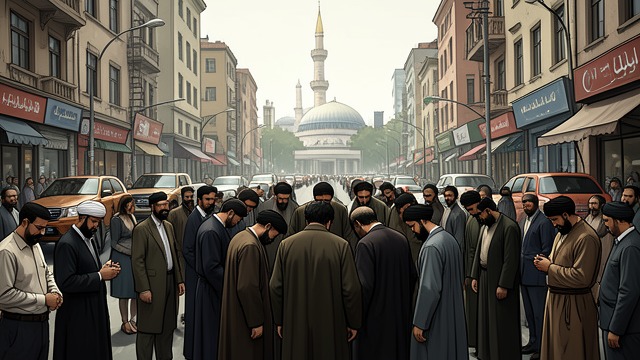
Prayer in the Street
A visible congregation
Muslims gather outside the Rue Verbier prayer room because the available space cannot accommodate them. Worshippers pray in public amid traffic, spectators, and occasional hostility.
A city’s unresolved division
The congregation’s presence reflects both an immediate lack of space and the broader dispute over a mosque. The street makes religious practice visible and politically charged before the murder occurs.
A Death Looks Sectarian
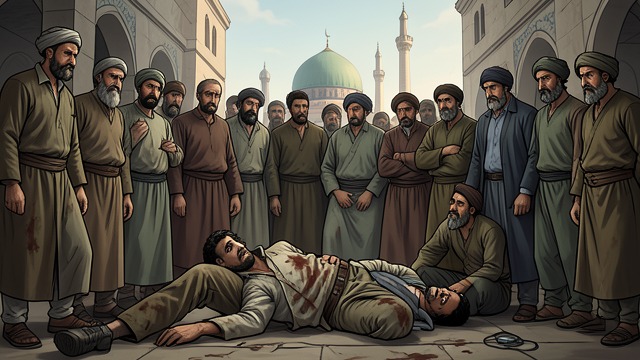
A Death Looks Sectarian
A charged assumption
A caller reports that a Muslim has been killed during prayer, and police initially prepare for a sensitive communal crisis. The dead man’s clothing and position make the claim seem plausible.
A correction arrives
The victim is identified as Emil Florian, a non-Muslim who had copied the worshippers’ movements. Correcting the assumption prevents the investigation from treating an apparent religious motive as established fact.
The Congregation Questioned
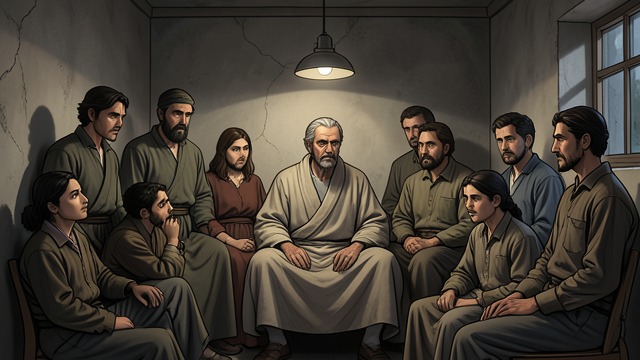
The Congregation Questioned
Cooperation under pressure
Darac interviews Imam Abdel Asiz, Hamid Toulé, and the worshippers who remained at the prayer room. Their silence and uncertainty do not mean they witnessed nothing; the prayer posture itself limits what people could see.
Trust is uneven
Darac appreciates Asiz’s cooperation but remains wary of Toulé’s knowledge of the cousin switch. The investigation must distinguish religious leadership, individual behavior, and the assumptions outsiders project onto the group.
The Cousins’ Deception

The Cousins’ Deception
A switch discovered
Darac realizes that Slimane Bahtoum was not the person beside Florian during the service. Mansoor Narooq took his place because he feared that routine police checks would expose his immigration status.
Two anxieties collide
The deception creates suspicion during a murder inquiry, but its motive is fear of deportation rather than religious extremism. Darac’s investigation has to respond to both the death and the vulnerability that made the switch seem necessary.
A Community Is Not a Suspect
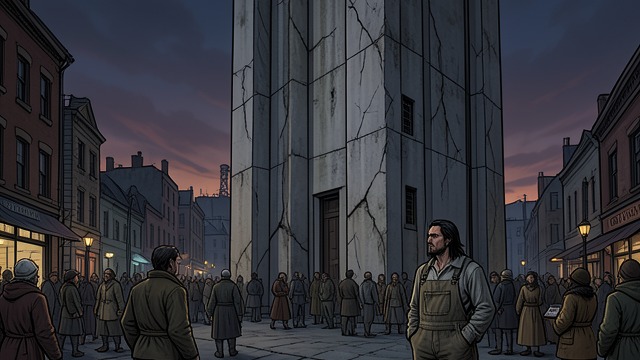
A Community Is Not a Suspect
Political pressure resists nuance
Frènes warns Darac that the case must be handled sensitively, but his concern also reveals assumptions about Muslims as a potential source of disorder. Other officials debate whether the mosque issue explains the threat.
Evidence redirects attention
The investigation eventually shows that the murder and kidnappings arise from personal crimes, not a collective religious plot. The distinction challenges the urge to turn a community into a single suspect.
3 July, midday
3 July, early afternoon
3 July, afternoon
3 July, late afternoon
3 July, evening
